Alumni Student Recruiters
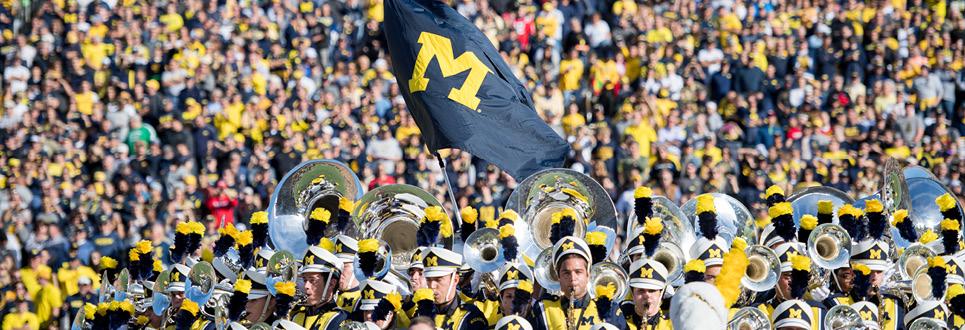

Your role as volunteer recruiters is critical to the university. We need your help more than ever as the volume of calls, emails, and inquiries from prospective and admitted students continues to rise alongside the number of applicants each year. Without alumni recruiters, we would not have the capacity to connect with students throughout Michigan, the United States, and the world. On these pages, you’ll find everything you need to know about your role as an alumni student recruiter (ASR).
As an ASR, a majority of your role is to help admitted students make the decision to attend U-M in the following ways.
Each spring, we host admitted student receptions around Michigan with a few locations out of state as well. They are designed to congratulate admitted students and encourage them to attend Michigan. The events are usually held in March or April and allow students to meet other admitted students from their area. Both Admissions and Financial Aid representatives will be in attendance to answer questions. You’ll help with registration, greet our guests, and share your experiences and perspectives as a U-M alum.
We strongly encourage alumni to work with their local club to host a special event to honor admitted and enrolled students in late March or early April. This type of event is often the deciding factor for students to choose to attend Michigan. The reception may be elaborate or modest and provides a valuable opportunity to recruit students. Special U-M T-shirts will be provided. Planning this event early is important. If you are interested in hosting a reception, please email us at [email protected].
Clubs or individual ASRs often sponsor a picnic, brunch, or reception for these students. This is a great way for you to introduce students to their local alumni club and keep students and families engaged with Michigan. The Alumni Student Recruitment staff can also provide clubs with names, addresses, and phone numbers of local, currently enrolled U-M students who should be invited to participate in the send-off activities. This enables incoming first-years to meet current students from their area and become familiar with the local alumni club, which they may join after graduation.
The heart of alumni student recruitment is the Adopt-a-School program. Through this program, you’ll serve as a local resource for admitted students.
You will be assigned one or more high schools in your area based on availability. Schools are designated as large, medium, or small. The size does not reflect the student population, but rather the number of students who annually apply to U-M. A large school has more than 30 applications a year; a medium school from 10 to 29; and a small school, five to nine. You may adopt one large school, two medium schools, or up to five small schools.
Early Decisions are released by Dec. 24, and Early Action decisions will be released by Jan. 29. A roster of admitted students from your adopted schools will be emailed to you shortly after decisions are released. First, send an email to congratulate the student and encourage them to enroll at U-M. In this initial email, you should also arrange a time when you can call and chat with the student. Be sure to include your contact information in the email to aid the coordination of future communication. If you would also like to mail postcards to your students, please contact our office and we will supply them. Specific talking points will be provided in the roster mailing.
Taking student recruitment to the highest level, some alumni invite admitted students and their parents to brunch or dessert, either at a local restaurant or coffee shop. While this is not an expectation, it does add a great deal of personalization and enhancement to student recruitment. Of course, parents must always be included in the meeting.
High school staff occasionally request an alumni representative to attend the school’s honors program and present a U-M scholarship. Your attendance furthers our goal of Michigan recognition and interest within your local school. A high school staff member or Alumni Student Recruitment staff will contact you if we receive a request from your area.
More than 25 Michigan counties have a designated county coordinator who receives the names of all admitted students in that county. In some counties, the county coordinator works with alumni volunteers to make sure all students are contacted. In Genessee, Ingham, Kalamazoo, Kent, Livingston, Macomb, Monroe, Oakland, Saginaw, Washtenaw, and Wayne counties, alumni adopt high schools. Alumni do not visit Michigan high schools since the Office of Undergraduate Admissions sends admissions counselors to meet students and high school counselors each fall.
College fairs introduce students to many different college opportunities. Several high schools in one area may sponsor a program and invite selected colleges to meet with their students and parents. ASRs should not be signing up for college fairs on their own, but may be asked to support Admissions staff in some cases. All college fair invitations must be sent directly to Admissions, so please forward any invitation that you receive to [email protected]. We carefully screen which fairs to attend and take into consideration the impact of our attendance or absence.
Due to the volume of fair invitations that we receive, we may ask for ASR assistance to cover an out-of-state fair. Our office will contact you if we are looking for fair coverage, and we will provide you with additional resources at that time. In-state fairs are covered by U-M professional staff.
Most fairs include 50-150 colleges and are held in a large room, such as a cafeteria or a gymnasium. Each college or university is given a table for college materials.
In the fall, juniors and seniors attend; in the spring, juniors and sophomores attend. Most of their questions pertain to programs of study, admissions criteria, cost, scholarships, financial aid, and campus location. If you volunteer at a college fair, you can find answers to these on the Office of Undergraduate Admissions website. You will feel more comfortable fielding questions after you review our site.
Do not worry if you are unable to answer all questions. You can say you don’t know — it’s better to say you will find out than to give incorrect information. Refer students to the Admissions website for detailed admission information. Encourage them to use our knowledge base, which is an interactive question-and-answer function on our website with more than 250 questions about timelines, requirements, residency status, exams, and more. Additionally, they can click the “Questions? Ask Blue” button on the Admissions website to send inquiries to U-M’s chatbot at any time.
Admit (ADMT)
A student who has been admitted but has not yet paid the enrollment deposit (Jan. 6 for Early Decision admits and May 1 for everyone else).
Admitted Student Reception
A reception or other event for admitted students, designed to encourage enrollment.
Applicant (APPL)
A student who has a current application on file; no final decision has been made.
Early Action (EA)
A nonbinding early application process in which students who apply by a certain date are guaranteed a decision shortly thereafter.
At U-M, students must apply by Nov. 1 to have their decision released by Jan. 29. Some EA applicants will be postponed for a later decision.
Early Decision (ED)
A binding early application deadline. Students must enroll if they are admitted. At U-M, students must apply by Nov. 1 and sign the Early Decision Agreement, indicating the student’s commitment to attend U-M if offered admission. Decisions are released by Dec. 24.
Some ED applicants will be postponed for a later decision. They will receive a decision notification during Early Action. If they are postponed again during Early Action, they will then be considered in Regular Decision and receive a decision by April 2.
Matriculant (MATR)
A student who has applied, been admitted, paid the enrollment deposit, and intends to enroll at U-M.
Plan Change (PLNC)
This should rarely appear on your roster, but if it does, please contact our office to verify that it is a matriculated student in the process of changing their academic program within the school or college to which they have been admitted.
Postponed Applicant
Students with strong credentials who are not offered admission on first review are postponed; the latest they will receive a final decision of admit, deny, or waitlist will be April 2. Early Decision or Early Action applicants may be postponed.
Prospect
A potential applicant who has not yet submitted a complete application.
Regular Decision
The Regular Decision process in which students must apply by Feb. 1 (Dec. 1 for School of Music, Theatre & Dance).
Summer Send-off
A party, picnic, or other event for new first-years who will be entering U-M in the fall; current students are often invited.
Waitlisted Applicant
A student whose application has been reviewed and who is a solid candidate, but to whom admission will not be offered unless space becomes available (generally from May to July).
There is no simple answer to the question, “What credentials do I need to get in?” We use a holistic review that considers many facets, with decisions made on an individual basis. No specific class rank, grade point average, test score, or other qualification by itself will ensure admission. Remember, it is never appropriate to give assurance of admission.
As a general reference point, the average GPA for the previous incoming first-year class was 3.92 on an unweighted 4.0 scale, with a mid-50th percentile range of 1400-1550 on the SAT and a mid-50th percentile range of 32-35 on the ACT. However, there are more qualified applicants than there are spaces, and we are unable to accept all qualified applicants. Consideration for admission to all U-M schools and colleges is made on a space-available basis. You can direct students to view U-M's visit piece for more information or our Requirements & Deadlines webpage.
Grades are important and strong predictors of college success, but no specific grade point average automatically ensures or denies admission. We recalculate an unweighted GPA using a 4.0 GPA scale and focus on a student’s performance in the traditional academic courses: English, math, science, social studies, and two years of the same world language.
Because we are looking at how each student takes advantage of the opportunities available to them, we consider the degree of difficulty of the classes attempted, the trend of the grades earned, and the appropriateness of the classes as preparation for the desired school or college. Students usually benefit in our selection process by electing to take honors and/or Advanced Placement/International Baccalaureate Diploma Program courses if such courses are offered by their school. However, students who attend a school that has limited advanced academic offerings are not penalized.
U-M’s test-optional policy will continue for the next recruitment cycle. Either test (ACT or SAT) is acceptable. We consider the best test results that are presented to us, so some students may wish to test more than once. U-M will use their highest superscore, which means that we will consider the best sub-scores reported across multiple test dates.
Please refer students to their Admissions counselor for any additional questions about testing policies.
The University of Michigan requires a high level of proficiency in English and does not offer intensive English or conditional admission. All speakers of English as a second language must submit either TOEFL, IELTS, or MET proficiency results. For test score ranges and more information, visit the English Proficiency Requirements webpage.
Students apply online through the Common Application at commonapp.org. There are additional U-M questions and essays as well. For more information, visit the Essay Questions webpage.
The University of Michigan offers three application plans for first-year applicants: Early Decision, Early Action, and Regular Decision. Students are encouraged to pick the plan that is the best fit, considering when they will be ready to apply and if they are prepared to make a binding commitment to U-M. Find detailed information on our application plans and deadlines.
Students who apply Early Decision have a financial aid application deadline of Nov. 15. All other applicants should be encouraged to submit their financial aid applications as soon as possible in order to get a financial aid package as soon as it’s available.
Tuition information is updated each year. Visit the Estimating Costs webpage for a breakdown of cost of attendance information.
Need-based assistance is designed to cover the difference between the cost of attending college and the student’s resources. The size of the difference is determined by a federally mandated formula. The Office of Financial Aid creates a package that may include scholarships, grants, loans, and Federal Work-Study employment. We encourage you to share the fact that U-M covers 100% of demonstrated financial need for in-state students. For complete details on financial aid application procedures and other sources of financial aid, visit the Office of Financial Aid website.
While most scholarships will consider financial need, some are based solely on merit. Information about scholarships is available through the Office of Financial Aid. To find out about athletic grants-in-aid, students should contact the Intercollegiate Athletic Department at 734-647-2583.
Please note that only U.S. citizens or permanent citizens are eligible for financial aid. Scholarships for international students are also extremely rare.
As a state-supported institution, U-M reserves a majority of its spaces for Michigan residents; however, undergraduate students come from all 50 states and 100+ countries. The residency regulations assume that those who are residents outside of Michigan will be assessed fees at the nonresident rate. There are specific criteria for residency status for tuition purposes, and students should read the regulations on the application carefully. More information on residency is available on the Residency webpage.
Many services are available to help students in all kinds of areas throughout their years at U-M. Support services include counseling of many types, excellent primary health care, and assistance for students with disabilities. For information regarding these services and more, students can contact our Campus Information Centers.
Destination Ann Arbor
315 W. Huron St.
Ann Arbor, MI 48103-4262
734-995-7281
U-M Campus Information Centers
Michigan Union
First Floor/Pierpont Commons
Ann Arbor, MI 48109-1308
734-764-INFO
Huetwell Visitors Center
1220 Student Activities Building
515 E. Jefferson St.
Ann Arbor, MI 48109-1316
734-764-7433
Each state and each geographic region within the state of Michigan has an assigned Admissions counselor. This counselor will be the one who takes action on the applications from your area to the College of Literature, Science, and the Arts and Michigan Engineering. They can also answer questions about admission to other U-M schools and colleges. You can find contact information for the counselor assigned to your area by visiting the admissions Contact Us webpage.
When a student leaves the “prospective applicant” stage and officially submits an application, they become protected by very explicit rules of confidentiality that the Office of Undergraduate Admissions abides by and supports.
The Family Education Rights and Privacy Act (FERPA) states that no information regarding the applicant may be shared with parties other than the applicant, unless the applicant is under the age of 18, and then only with the parents. This mandate means that all queries regarding the student’s status are prohibited. It also eliminates confirmation of who has applied. This period of confidentiality extends from the time we receive an application and is only lifted when the student is officially admitted. At that time, we are still in a period of confidentiality; however, we can share the student’s name and contact information with you as you are an official representative acting on our behalf. Please take this into account before you ask Admissions staff for information regarding a student and their application review as it places us in the awkward position of having to decline your request. If you are certain that a student has applied, you can still let us know that you support their application and express hope that they are admitted – just remember we cannot legally confirm anything regarding their status until they are officially admitted.
The admissions process can be stressful for any parent, especially when you’re waiting to hear if your child has been admitted to U-M. As an ASR, you spend significant time contacting admitted students, congratulating them, and encouraging them to choose our university. If you add to the mix navigating the U-M admissions process with your own child, it can prove difficult to straddle the two worlds successfully.
We ask ASRs to pause their participation for the year if they have a child applying to U-M. This policy is consistent with our peers.
We know ASRs are eager to share their U-M pride, and we are lucky to have such a dedicated support base. Keep in mind that you can continue to serve as an informal source of information in your community and resume your role with the program the following year.
If you have a child planning to apply to U-M in the next application cycle, please contact Jody Gore at [email protected]. We will work with you to provide coverage for your adopted schools until you can resume your role with the program.
Alumni volunteers play an active role in providing a welcoming, healthy, and safe environment for the prospective and admitted students (minors) they interact with. The university requires all volunteers to comply with university policy related to working with minors, which includes a background check and appropriate training. The purpose of the policy is to promote the health, wellness, safety, and security of children who are entrusted to the university’s care, custody, or control, or who participate in programs held on university property and requires all volunteers working with minors in university-sponsored programs or in programs for minors held on university property to comply with this policy. The policy requires program registry and background checks, defines appropriate conduct for those who work with minors, requires those working with minors to undergo training, and specifies reporting obligations.
Since June 1, 2014, the university has required criminal background screening of all authorized adults involved with children. In compliance with this policy, a background check will be required before alumni can participate in the Alumni Student Recruitment program.
More information and resources about this policy can be found on the Children on Campus website.
The Office of Undergraduate Admissions utilizes Michigan’s vast alumni network for assistance with various recruitment tasks, primarily making individual communications with admitted students and purveying positive information about their student experience. As an educational institution, we place the highest value on ensuring that everyone connected with the University of Michigan works to enhance our ethical standards.